
Retaining Walls Sydney
Need a retaining wall built on a sloping block, along a boundary, or to hold back a garden bed? You’re in the right place. We’re a licensed Sydney building company that designs and builds retaining walls across the metro area, from the Inner West and Eastern Suburbs through to the North Shore, Sutherland Shire, and out to the Hills District.
Our team has over 60 years of combined experience in the building industry, and we hold both a building licence and a plumbing/gas fitting licence. That means one team handles the lot, from the initial site assessment and drainage planning right through to the finished wall. You deal with us directly, and one of the owners supervises every job.
We work with homeowners, builders, and commercial property owners on:
If you’re after a quote or a site visit, give us a call on 1800 1 OASIS or send through your details, and we’ll get back to you the same business day where we can.
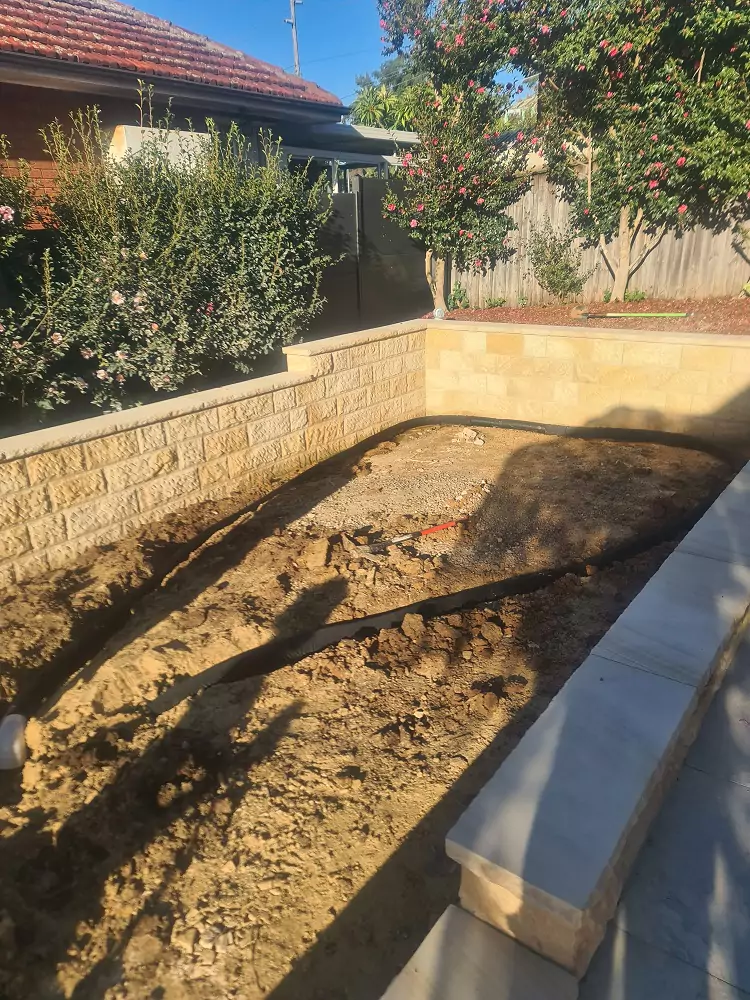
Sydney Retaining Wall Builders for Homes and Businesses
Sydney sites are rarely flat. Sloping blocks, sandstone shelves, reactive clay soils, and tight boundary setbacks all make retaining wall work more involved than it looks from the kerb. We’ve built walls on properties across Sydney where the brief was anything from “hold back this garden bed” to “make this slope usable so we can put a pool on it.”
Residential work is the bulk of what we do. Most jobs fall into one of three buckets: walls that turn a slope into a level lawn or garden, boundary walls between neighbours, and walls that retain soil around a new pool or outdoor living area. We can build the wall on its own or as part of a wider landscaping project.
Commercial work covers retail sites, multi-dwelling developments, body corporate properties, and small civil jobs. We’ll work on the engineer’s drawings, council requirements, and contractor timelines.
Sloping blocks, boundary walls, and garden levels all come with their own quirks. Sloping blocks usually need tiered walls or a tall single wall with proper engineering. Boundary walls bring shared responsibility, questions and access considerations. Garden-level walls are smaller and often don’t need approval, but still need proper drainage if you want them to last.
Whatever the job, we’ll talk through the options on site and tell you straight what’ll work and what won’t.
Retaining Wall Options and Materials
There’s no single “best” retaining wall material. The right choice depends on the height of the wall, what’s behind it (soil load, water, structures), how it needs to look, your budget, and what your site can access. Here’s a rundown of what we build most often.
Concrete Sleeper Retaining Walls
Concrete sleepers are the workhorse of modern Sydney retaining walls. They sit between hot-dipped galvanised steel H-beams, stack neatly, and last decades without maintenance.
- Sleepers are 200mm wide, 75 to 100mm thick, and available in lengths from 1.5m to 2.4m
- Finishes include smooth, textured, and coloured textured
- 100% termite resistant
- Can be built up to 3m high with appropriate engineering
- Compatible with fences installed directly on top of the wall
- More expensive upfront than timber, but effectively a once-only build
Because the sleepers are heavy, we use lifting equipment to set them in place. They’re the go-to option when you want a wall that does the job and stays out of the way visually.
Timber Retaining Walls
Timber walls have a warmer, more natural look and suit garden-side jobs and shorter walls. We use CCA-treated hardwood with galvanised steel posts.
- Standard sleeper sizes: 75 x 200mm or 100 x 200mm
- Easy to cut to angles, perfect for stairs, planter boxes, and curved sections
- Can be stained to match the rest of the garden
- CCA-treated timber with galvanised posts typically lasts 30+ years
- Lighter and easier to install in tight-access sites
- Taller walls may need engineering depending on site conditions
Timber’s a strong choice when you want something that looks like it belongs in the garden rather than holding it back.
Link Block Retaining Walls
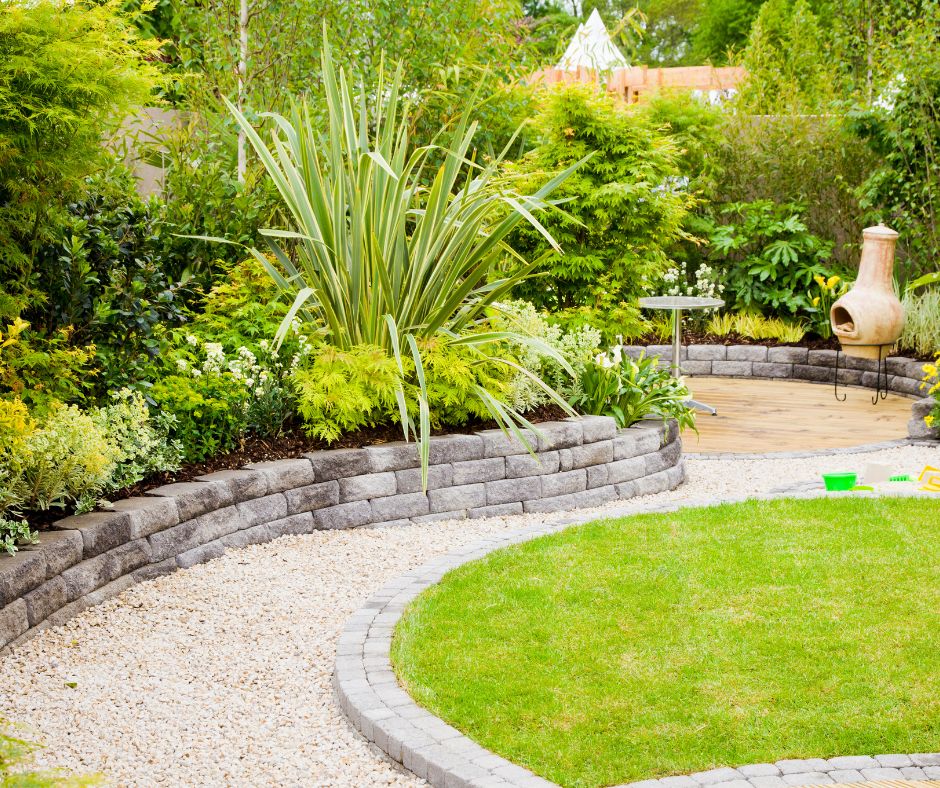
Link blocks are dry-stacked segmental blocks that interlock without mortar. They’re great for curved or shaped walls and come in a range of colours and textures.
- No deep footings required, strip footings as shallow as 200mm work for most installs
- Can be shaped, curved, or stepped to suit the design
- Multiple colour combinations to match the house or garden
- Textured surface finish
- Recommended maximum height of 1m without engineered reinforcement
- Not suitable for narrow boundary walls on subdivided land
If you want a wall that adds to the look of the garden rather than just being a structural element, link blocks give you options.
Besser Block Retaining Walls
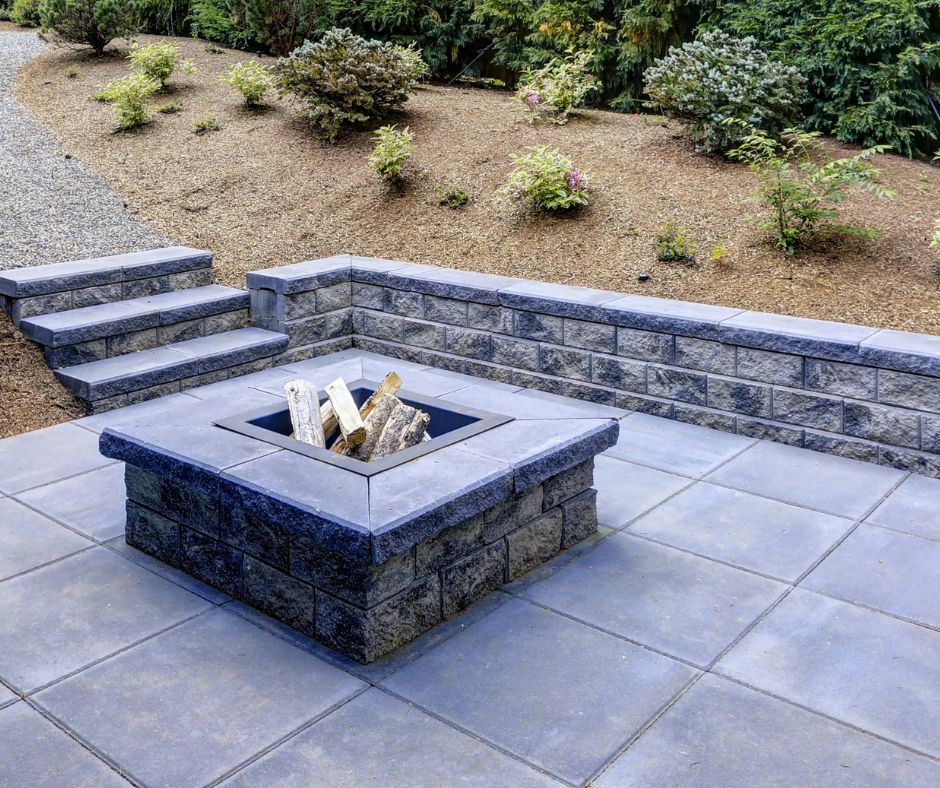
Besser blocks are high-strength concrete blocks that dry-stack and interlock with pins. They sit on a compacted road base rather than a poured concrete footing, which speeds up installation.
- Interlocking system, stacks like oversized building blocks
- Sits on compacted road base, no concrete foundation needed for most installs
- Available in black, cream, and other colours
- Surface textures include split-face and smooth
- Some block systems can be built over 1m without reinforcement
- Strong, durable, and well-suited to taller retaining work
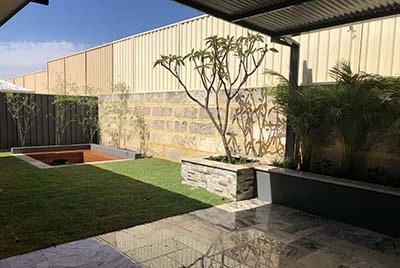
Choosing the Right Material for Your Site
The short answer: it depends on the height, the load, the look you’re after, and what your site can take. The longer answer is what we’ll talk through on a site visit. We’ll factor in:
- Wall height and what’s being retained (soil only, vehicles, structures, pools)
- Soil type and drainage on site
- Access for materials and machinery
- Boundary setbacks and easements
- Council and engineering requirements (more on this below)
- Budget and how the wall fits into the bigger picture
We don’t push one material over another. We recommend what’ll actually work for your site.
Pricing, Compliance, and Project Requirements
What Affects Retaining Wall Cost in Sydney
Sydney retaining wall pricing varies a lot, and any builder who quotes you a per-metre figure without seeing the site is guessing. Here’s what actually moves the price:
- Wall height. Taller walls need more material, deeper footings, and (above certain heights) structural engineering. Cost rises quickly past 1m.
- Material choice. Timber is usually the cheapest. Concrete sleepers cost more upfront but last longer. Link block and Besser block sit in between, depending on the system and finish.
- Length and total area. Longer walls share fixed costs (mobilisation, site setup) across more square metres, so the per-metre rate often drops with scale.
- Site access. Tight access, no-go zones, and difficult terrain mean more hand work, smaller machines, and more time.
- Drainage requirements. Behind every long-lasting retaining wall sits a proper drainage system. Aggregate, drainage cell, geotextile fabric, and ag pipe all add to the cost but are non-negotiable for walls you want to last.
- Engineering and council fees. Walls that need engineered designs or council approval bring extra costs for documentation, plans, and certification.
- Excavation and disposal. Removing existing walls, dealing with rock, or carting spoil away all add to the job.
We give written quotes after a site visit. That way, you get an actual price, not a ballpark that’ll need correcting later.
Council Approval and Engineering Considerations
NSW rules on retaining walls aren’t one-size-fits-all, but here’s the general lay of the land:
- Walls under 600mm retaining only soil (no surcharge load from structures, vehicles, or pools above) usually don’t need council approval. They’re treated as exempt development under most local council rules.
- Walls between 600mm and 1m often qualify as exempt or complying development depending on the council, the setback from boundaries, and what’s behind the wall.
- Walls over 1m, or any wall retaining a surcharge load, typically need engineered design and either a complying development certification (CDC) or a development application (DA) through council.
- Boundary walls may need agreement from neighbours and proper notification regardless of height.
Different Sydney councils interpret the rules slightly differently, so don’t assume a wall that’s fine in one suburb is automatically fine in the next. We deal with this for you. We’ll tell you whether your project needs engineering or council approval, organise the structural engineer where required, and lodge what needs lodging.
Drainage and Soil Conditions in Sydney
Sydney soils are varied. Eastern Suburbs and harbour-side properties often sit on sandstone shelves with shallow soil. The Hills District and Northwest see a lot of reactive clay. Coastal sites get sandy, free-draining ground. Each behaves differently behind a wall.
Drainage is the single biggest factor in whether a retaining wall lasts or fails. Water building up behind a wall creates hydrostatic pressure that can push, lean, or crack the wall over time. Every wall we build includes:
- Free-draining aggregate (usually 20mm drainage gravel) behind the wall
- Geotextile fabric to stop fines from clogging the drainage layer
- An ag pipe (slotted drainage pipe) at the base, sloped to a stormwater outlet or discharge point
- Weep holes in solid masonry walls where appropriate
Skipping any of these saves money on day one and costs you the wall in five to ten years. We don’t skip them.
Why Build With Oasis Landscaping Projects
A few things set us apart from the typical retaining wall quote you’ll get in Sydney:
- Licensed builders, not just landscapers. We hold a building licence and a plumber/gas fitter licence, so we can handle every part of the job under one ABN.
- 60+ years of combined experience. The team has been building in Sydney long enough to have seen most things go wrong on a site, which means we know how to stop them from going wrong on yours.
- Owner-supervised jobs. One of the owners is on every site. You won’t be chasing a project manager who’s never visited the property.
- End-to-end capability. We can build the wall on its own, or we can fold it into a wider landscaping, pool, or outdoor living project. Same team, same standards, one point of contact.
- Straight quotes. Written, itemised quotes after a site visit. No “we’ll work it out as we go.”
Ready for a Quote?
Tell us about the site, and we’ll come and have a look. We’ll talk through the options, give you a written quote, and explain what’s involved before you commit to anything.
Call: 1800 1 OASIS (1800 1 62747)
Frequently Asked Questions
Talk to a Sydney Retaining Wall Builder
Whether it’s a small garden wall or a fully engineered structural job, we’ll come out, have a look, and give you a straight quote.